01
Define the problem
Coordinate by phone, email, drawings, photos or site visit to understand the issue, product handled, required flow rate, and where the process starts and ends.
For customers who need more than a replacement part, we review the problem, product handled, desired flow rate, process start/end points, existing equipment and installation constraints before recommending components and quoting supply or installation coordination.
For larger reviews, we start with scope definition, then turn the application into a quoteable component and installation-support package.
Coordinate by phone, email, drawings, photos or site visit to understand the issue, product handled, required flow rate, and where the process starts and ends.
Confirm whether this is a new addition, replacement, upgrade or retrofit. Review existing equipment, layout constraints, line sizes, material characteristics and operating conditions.
Once the scope is understood, prepare a quote for suitable components, supplier options, fabricated fittings, freight, lead time and labour or installation coordination where required.
After approval, coordinate component supply, shipping, project timing and installation support depending on the specific job and customer preference.
The value is not merely finding a supplier. It is narrowing the risk of buying the wrong component, missing a pressure or material-handling constraint, under-sizing a line, or quoting a part that cannot connect to the plant as installed.
These are the practical details that help turn a vague request into a quoteable scope.
What problem is being solved: moving product, increasing capacity, replacing failed parts, reducing dust, adding routing, improving reliability or creating a new process step.
Bulk density, particle size, abrasive/sticky/friable properties, moisture, temperature, desired flow rate, current capacity issue and duty cycle.
Where the process starts and ends, source equipment, destination equipment, horizontal run, vertical lift, number of bends, routing and available space.
Rotary valve openings, flange sizes, bolt patterns, hopper outlet dimensions, pipe OD, coupling style, line standard and available height.
Bin, silo or hopper style, working capacity, refill frequency, discharge arrangement, high-level and low-level indication needs, sensor mounting location, dust conditions and desired signal or control output.
Access, shutdown timing, indoor/outdoor location, support steel, crane/forklift needs, contractor responsibilities and whether installation coordination is needed.
Budget, preferred delivery, supply-only vs installed, shipping location, supplier preference, spare-parts needs and documentation requirements.
Not every customer knows the exact part or system arrangement they need. These questions are meant to make it easier to start a review with the information already available.
That is a common starting point. Many plants know they need to move, meter, collect, discharge, store or separate a material, but they may not know whether the solution involves a blower, rotary valve, pipe system, slide gate, diverter, magnet, filter, bin, silo or custom transition. We help review the process and narrow the scope before quoting components.
We can review the material being conveyed, desired flow rate, conveying distance, pickup and discharge points, existing equipment, available space and connection requirements to help identify suitable component options. For more complex systems, additional supplier review, testing or a separately defined formal engineering scope may be required.
Yes. Rotary valve selection depends on the material, required throughput, pressure or vacuum condition, inlet and outlet size, clean-out needs, wear concerns, temperature, duty cycle and whether the valve is being used for metering, feeding, discharge or airlock service.
Magnetic separation may be considered when metal contamination could damage downstream equipment, affect product quality or create maintenance issues. The correct magnet style and location depend on the material, flow path, installation space, cleaning access and the type of contamination risk.
We can help discuss storage needs based on material type, required capacity, refill frequency, discharge method, equipment layout and process flow. Bin or silo sizing and supply may require additional review of site conditions, structural support, loading, safety and installation requirements.
Yes. High-level and low-level indication should be reviewed around the material, bin style, installation point, dust conditions, access, required signal and control requirements. Depending on the application, options may include rotary paddle level indicators, tuning fork switches, capacitive sensors, ultrasonic sensors, radar-style sensors or other supplier-supported level detection products.
We can help review the application and coordinate with suitable suppliers to determine a practical sensor style for the material and storage arrangement. Electrical installation, controls integration and any required code-specific work should be defined separately with the appropriate qualified parties.
Both can be reviewed. Some projects only need a replacement component, filter, fitting or coupling. Others require a coordinated package involving a blower, rotary valve, conveying line, elbows, couplings, diverter, receiver, filter, magnet, support items and custom fabricated transitions.
Yes. Existing systems are often reviewed through photos, drawings, measurements, nameplates, operating issues and site details. We can help identify replacement parts, bottlenecks, connection requirements and component options for upgrades or modifications.
Installation can be discussed depending on the project location, scope and trade requirements. Some jobs are supply-only and shipped directly to the customer. Others may involve coordinating installation support, local contractors or customer-provided maintenance teams.
Useful information includes the material being handled, desired flow rate or capacity, where the process starts and ends, photos of the existing equipment, drawings or sketches, available space, connection sizes, power or control requirements, high/low level indication needs, installation location and whether the project is a replacement, upgrade or new addition.
Our typical role is technical application review, component scoping, supplier coordination, quoting and supply support. If sealed drawings, formal engineering responsibility, code compliance review, structural review or combustible-dust analysis is required, that scope should be identified separately before proceeding.
Often, yes. Photos, rough measurements, nameplates, drawings, failed part images, old invoices and equipment tags can be enough to start narrowing the scope. Final quoting may still require confirming dimensions, connection style, material, quantity and site constraints.
The goal is to reduce the chance of buying the wrong component, missing a flow or pressure constraint, choosing the wrong connection style, or quoting equipment that does not fit the existing plant. The review bridges the customer problem, suitable suppliers, component supply and practical installation path.
Additional pages help customers find the site from specific component and problem searches.
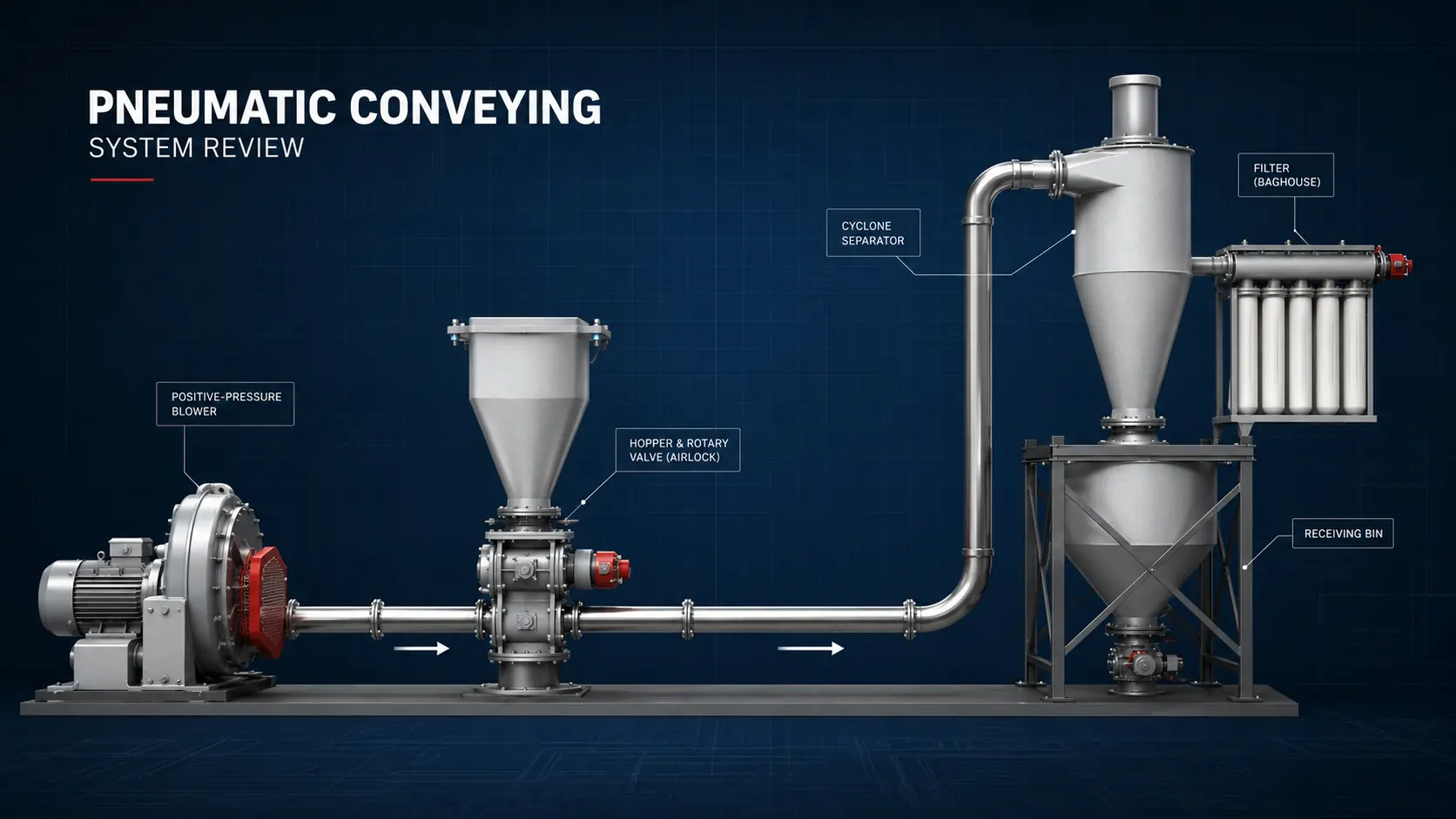
System-level review for moving product from one point to another.
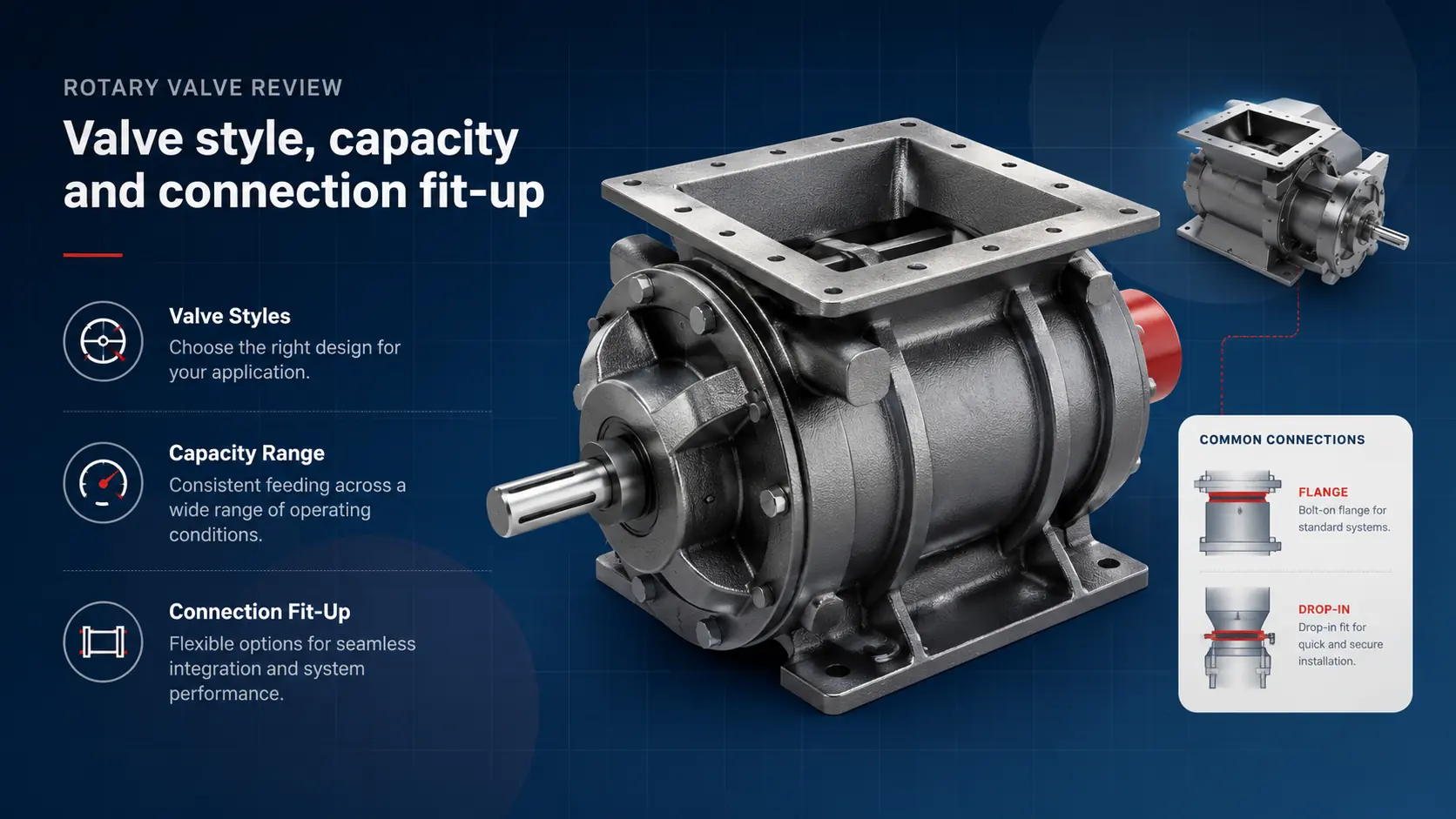
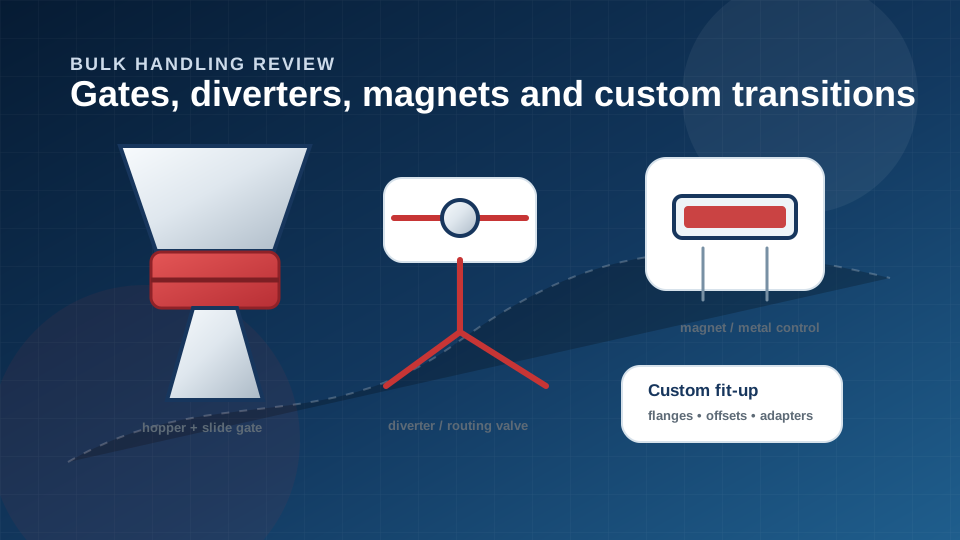
Good for photos, failed parts, odd transitions and unclear product categories.
Send what you have. Photos, sketches, nameplates, drawings, layout screenshots or old invoices can be emailed directly to sales@canadianconveying.ca.