Outdoor explosion venting • Dust collection • Safety components
Explosion Vent Deflectors
Source deflector hoods and discharge-guiding assemblies for compatible outdoor explosion vents. Designed for specific venting arrangements, these components help direct vented flame, heat and pressure toward a defined discharge area rather than allowing an unrestricted release.
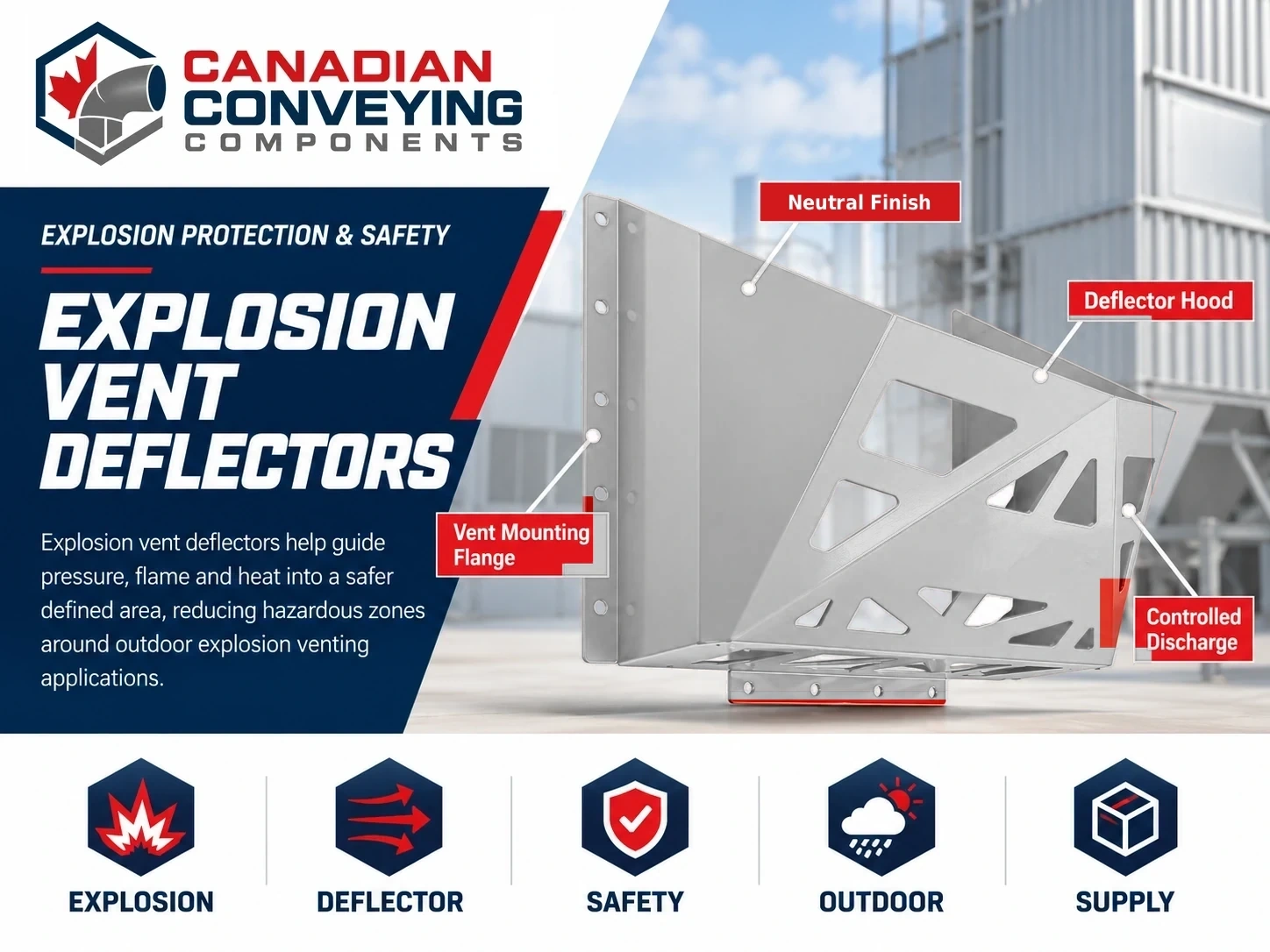
Representative illustration only. Confirm deflector model, vent compatibility, orientation and required safe discharge zone from the manufacturer's engineering documentation.
Guide explosion vent discharge in outdoor applications
When an explosion vent opens, its discharge can include flame, heat and a pressure wave. A compatible deflector changes the discharge direction and may help manage the extent or location of the hazardous area around equipment. Deflectors are selected as part of the complete venting arrangement, not as interchangeable sheet-metal hoods.
Venting applications
Deflector systems may be considered for suitable outdoor equipment with engineered explosion vents, including:
- Dust collection and filtration equipment
- Process vessels or material-handling equipment
- Retrofit projects using compatible vent panels
Assembly features
Configuration varies by supplier and matched vent system. Potential features include:
- Formed steel deflector or hood construction
- Flanged or bolted mounting arrangements
- Painted steel or alternate material options
Supplier documentation
Selection must follow the actual manufacturer's limitations and the hazard assessment, including:
- Vent panel model and dimensions
- Permitted mounting and discharge geometry
- Venting performance and approval documentation
Important — explosion vent deflectors are not isolation valves.A deflector redirects the discharge from an explosion vent. A passive flap isolation valve has a different role: limiting explosion propagation through connected ductwork. Neither should be substituted for the other. Only the manufacturer and qualified explosion-protection designer can verify suitability for a particular installation, including applicable codes, hazards and exclusion zones.
Specifications for an explosion vent deflector inquiry
An existing vent model number or nameplate can be the fastest starting point. If you are modifying an installation, provide enough detail to review equipment compatibility and site restrictions.
Vent identification
Manufacturer, model, vent type, opening dimensions, mounting pattern and any existing certification or datasheet.
Equipment details
Dust collector or vessel type, dimensions, location of the vent panel and orientation of the proposed discharge.
Dust or process hazard
Material description and known explosion properties, such as Kst, Pmax and pressure-related design values, where available.
Outdoor clearances
Surrounding walkways, buildings, access roads, neighbouring equipment and any restricted discharge directions.
Material and environment
Weather exposure, corrosion conditions, desired material or coating and any washdown or site standards.
Quantity and replacement
Number of assemblies, shipping destination, installation photos and whether this is a matched replacement or a new application.
Manufacturer-published ratings and certificates apply only to the specific product and approved installation conditions. We can assist with sourcing inquiries; the engineering of the explosion venting system and suitability determination must be completed by appropriately qualified parties.
Frequently asked questions
Common questions when specifying or replacing an explosion vent deflector.
What does an explosion vent deflector do?
For a compatible explosion vent, a deflector helps direct the vented pressure wave, flame and heat toward a defined discharge direction. It is intended for a specific vent arrangement and must be evaluated together with the equipment and the surrounding area.
Does a deflector eliminate the need for a safety zone?
No. The exclusion zone and discharge direction depend on the manufacturer's documented performance and a site-specific hazard assessment. A deflector may change the required zone, but it does not make the discharge harmless.
Can any deflector be fitted to an existing explosion vent?
No. The deflector must be compatible with the selected vent, mounting conditions and explosion-protection design. Supply and installation details must be confirmed by the appropriate manufacturer and qualified personnel.
Is an explosion vent deflector the same as an explosion isolation valve?
No. Vent deflectors guide discharge from vent openings. Isolation valves are intended to address propagation into connected ducts or other equipment. These products serve different protective functions.
Can Canadian Conveying help with a replacement unit?
Send a photo, manufacturer name, vent model, dimensions and installation details. We can review possible sourcing routes and request quotations for suitable products, subject to supplier confirmation.
Need an explosion vent deflector?
Share an existing vent model, equipment details and proposed discharge location. We can help identify relevant supplier options and obtain a quotation.
Vent model and opening dimensions
Equipment and material details
Mounting and discharge orientation
Quantity and delivery location
Related dust collection & protection components
Different system hazards require different components. Explore the adjacent product categories without treating them as interchangeable protective devices.