Types & accessories
Discuss supplier-supported options such as:
- Pneumatic piston, turbine and ball-type vibrators
- Electric rotary vibrators and compatible control arrangements
- Mounting brackets, air-line components and replacement units
Source external industrial vibrators for bins, hoppers, chutes and silos. Pneumatic and electric designs are used to help loosen built-up bulk solids and encourage more consistent discharge where vibration is suitable. We help organize the operating, mounting and material details suppliers need to quote an appropriate unit.
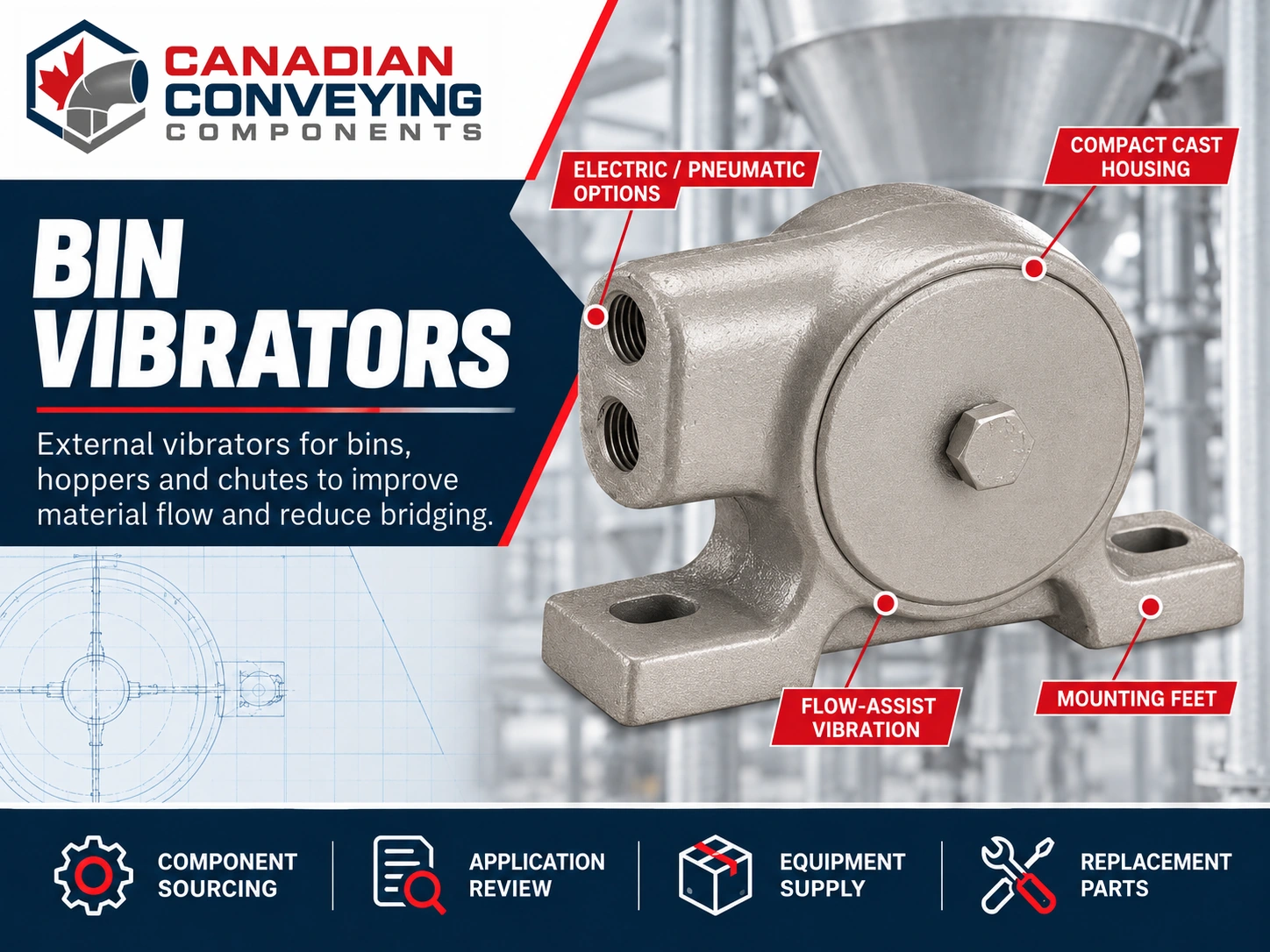
Representative illustration of an external pneumatic-style vibrator. Electric, pneumatic and other vibrator types have different drive mechanisms and mounting needs. Actual performance, ratings, materials and suitability require supplier confirmation.
An external vibrator should be selected for the vessel, material and flow problem—not merely by its physical size. We can help gather the relevant information for a supplier-supported recommendation.
Vibration is a flow aid, not a universal cure. Different products and vessel designs respond differently to vibration, so the supplier should assess the application before a unit is selected.
Conceptual mounting; vibration force and structural suitability must be reviewed for each vessel.
Vibration can help disturb material that has formed an arch above an outlet or is adhering to hopper walls. Correct force, frequency, location and operation are important.
Both options may be suitable for industrial service. Selection depends on available utilities, operating cycle, noise and environmental conditions, installation and supplier-rated performance.
An external vibrator mounts to an existing vessel wall. A vibrating bin discharger is a separate suspended discharge assembly. They solve different mechanical and process problems.
Proper installation matters as much as vibrator selection. Excessive or incorrectly mounted vibration can damage hopper panels, welds or attached equipment; suitable brackets, structural checks and manufacturer guidance are essential.
Consider wall thickness, stiffeners, mounting pad or channel, bolt arrangement, equipment isolation and the location of existing welds and instrumentation.
Account for frequency, force, duty cycle, noise, temperature, airborne dust, washdown, electrical classification and the risk of compacting some materials.
Existing nameplate, air pressure, port sizes or motor voltage, mounting hole pattern, enclosure ratings and service history can help identify a suitable replacement.
Send a photo of the bin, hopper or chute and explain where material is sticking or bridging. For a replacement, a nameplate photograph and mounting dimensions are especially helpful.
Explore adjacent product categories and supporting resources.
Answers to common questions about industrial external vibrators for bins, hoppers and chutes.
External bin vibrators bolt to a bin or hopper wall to transmit vibration into the vessel. Bin activators or vibrating bin dischargers are separate assemblies fitted beneath storage equipment, generally using flexible connections and independent suspension.
The choice depends on available air or electrical power, required force and vibration characteristics, duty cycle, sound limits, environmental classification and maintenance preferences. The equipment supplier should confirm the proper design and ratings.
It can in some applications, but the underlying material properties, outlet geometry and operating method matter. Vibration may not be appropriate for every material and can sometimes increase compaction. Share the material and observed flow behavior for supplier assessment.
Sometimes. A replacement inquiry should include the current model, hole spacing, bolt sizes, plate thickness, air-line or electrical details and vessel design. Any modified mounting arrangement requires appropriate structural and installation review.